
Buying Guide · Guangzhou Beauty Supply Chain
How to Verify a Cosmetic Manufacturer in China
A practical due-diligence framework for verifying a Chinese cosmetic manufacturer, including licence checks, ISO 22716 evidence, factory audits, batch traceability and destination-market documents.
To verify a cosmetic manufacturer in China, match the legal company, production licence, factory address, certificate scope, bank beneficiary and actual production site before paying a deposit. Then test whether the factory can reproduce an approved sample under controlled batch records and provide the documents required by the destination market.
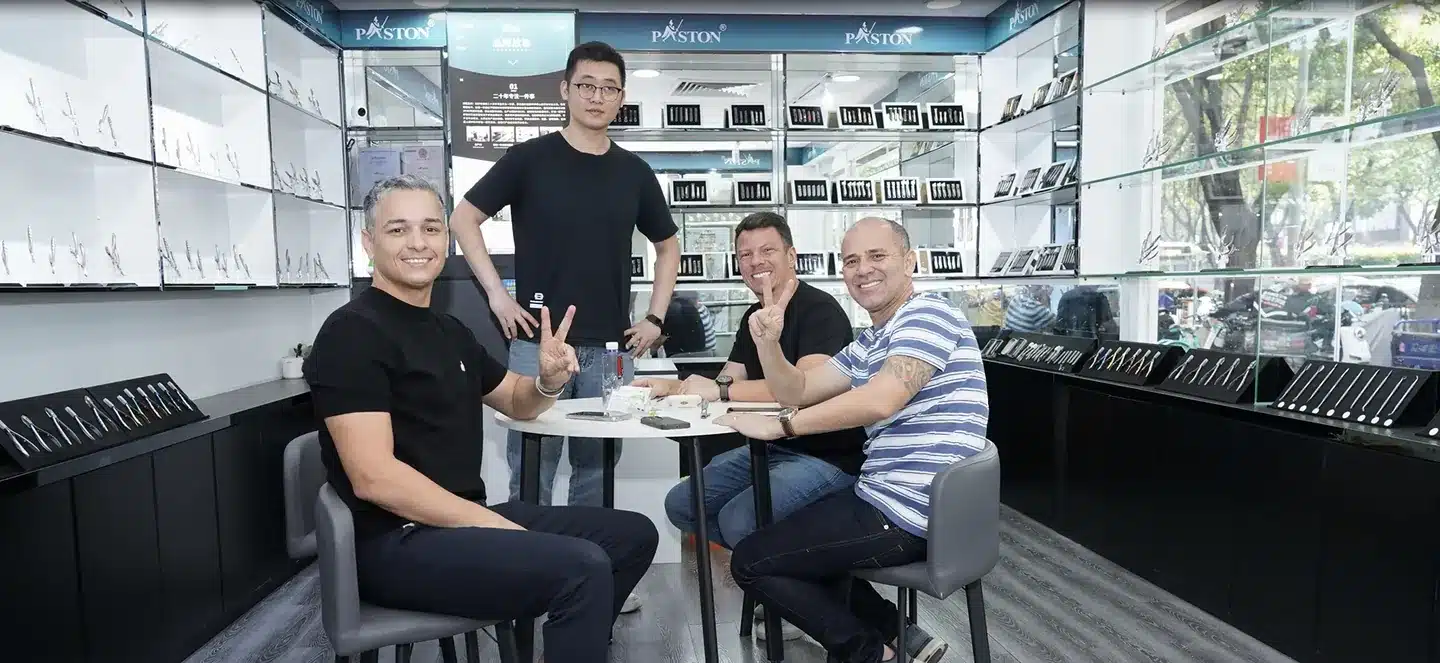
A polished showroom, a marketplace badge or a PDF certificate is not sufficient on its own. Reliable verification uses an evidence chain: legal identity, licensed manufacturing scope, quality-system records, physical capability, product documentation and commercial controls must point to the same business and site.
Factory verification: the short answer
- Identify every company in the transaction. Record the seller, legal manufacturer, exporter and payment beneficiary.
- Verify the production licence and permitted scope. The company name, address and product category must match the proposed order.
- Check ISO 22716 or GMP evidence at the issuing source. Review the certificate number, site, scope, status and audit body.
- Confirm real production capability. Inspect the relevant workshop, equipment, staff, line capacity and current records.
- Trace one recent batch. Follow raw materials, weighing, filling, testing, release and retained samples through the records.
- Review destination-market readiness. Confirm that the supplier can provide formula, INCI, COA, SDS/MSDS, test and manufacturing documents.
- Control the commercial handover. Use an approved sample, signed specifications, quality agreement and pre-shipment inspection.
Step 1: map the legal manufacturer and every contracting party
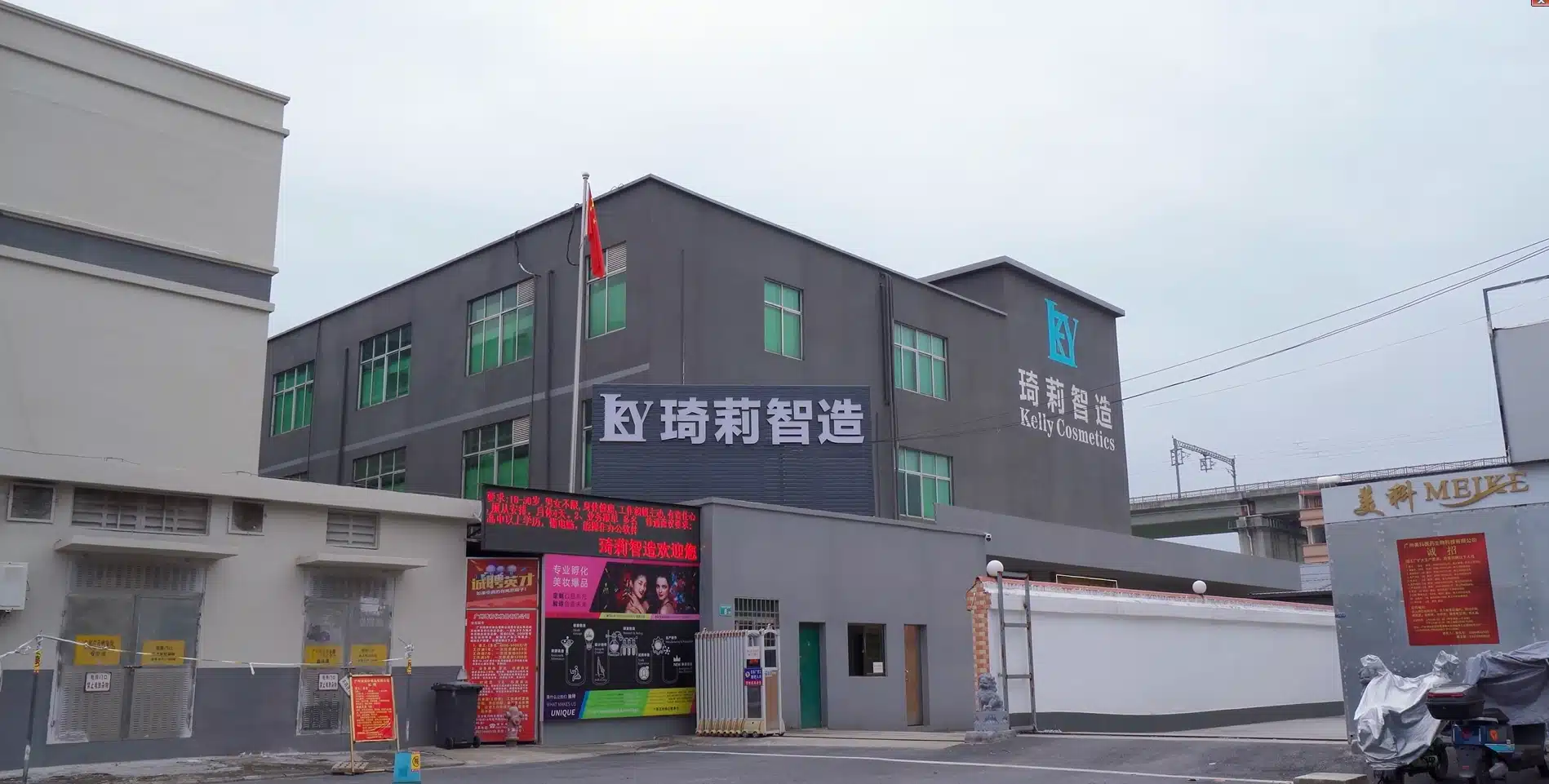
Start with a one-page entity map. Do not assume that the sales representative, invoice issuer, exporter and manufacturer are the same company. A legitimate project may involve several related entities, but the relationship must be disclosed and documented.
| Entity or record | What to collect | What must match |
|---|---|---|
| Contracting seller | Registered company name, unified social credit code, address and authorised signatory | Quotation, contract and invoice |
| Legal manufacturer | Business licence, cosmetics production licence and factory address | Certificate scope, product category and production site |
| Exporter | Exporting company name and relationship to the seller | Commercial invoice and customs documents |
| Payment beneficiary | Bank account name and receiving bank | Contracting entity or a documented related-party arrangement |
| Brand owner or responsible person | Company responsible for label and destination-market obligations | Artwork, product dossier and regulatory submissions |
If the payment beneficiary does not match the contracting seller, pause the payment until the supplier provides a written explanation and supporting relationship documents. Never accept a last-minute change of beneficiary based only on an email or messaging-app instruction.
Step 2: verify the cosmetics production licence and scope
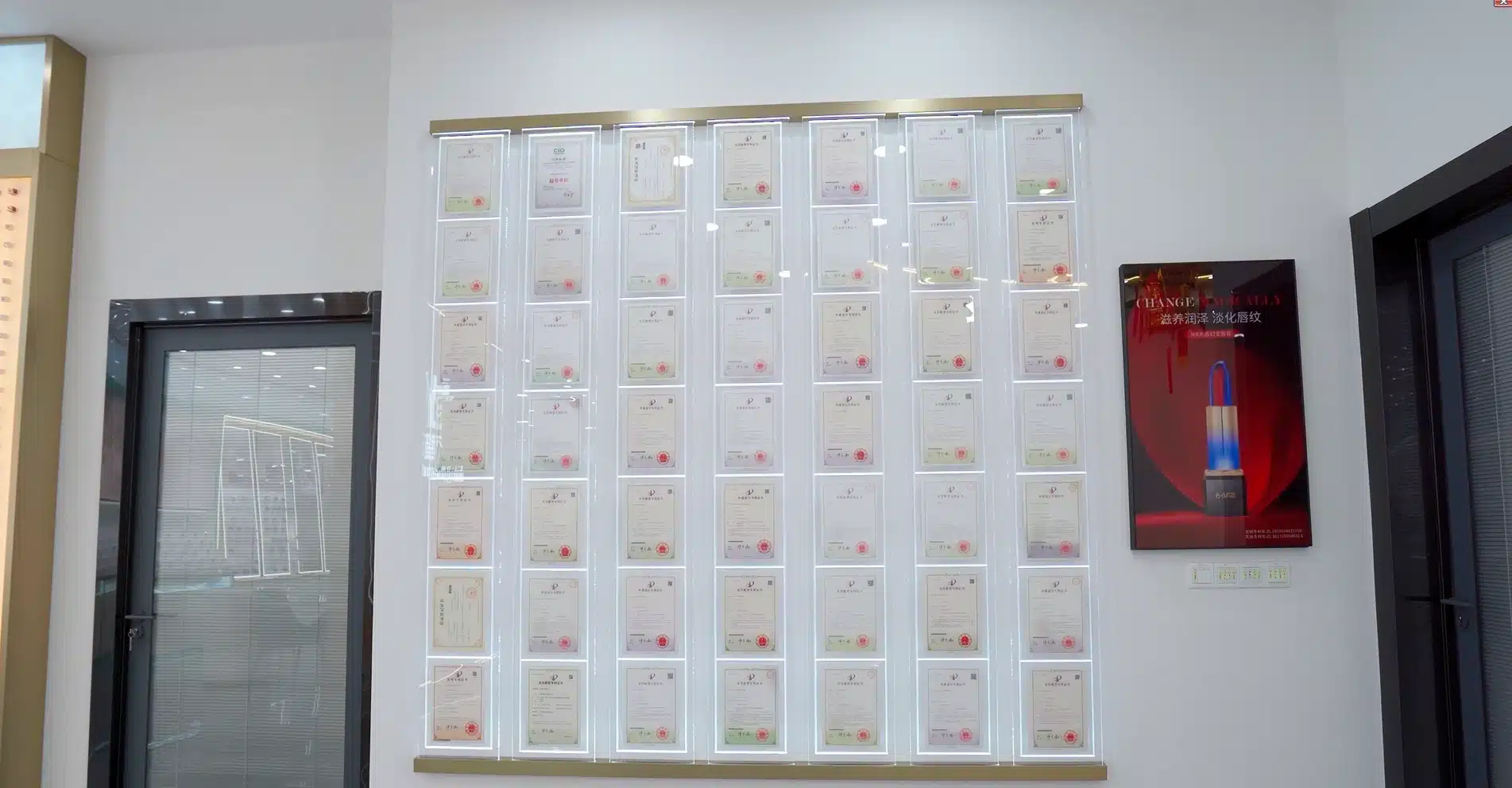
Ask for a clear, current copy of the cosmetics production licence and business licence. Compare the Chinese company name character by character, then check the registered address, production address, licence number, permitted categories, issue date and expiry date.
The National Medical Products Administration’s cosmetic production-licence data standard identifies core fields including the enterprise name, licence number, unified social credit code and permitted production items. Use the relevant NMPA or provincial regulatory service to verify the record rather than relying only on a supplier-provided scan.
Licence warning signs
- The licence belongs to a different company with no documented relationship.
- The registered site differs from the factory being shown to the buyer.
- The requested product category is outside the permitted manufacturing scope.
- The licence is expired, blurred, cropped or missing pages.
- The supplier will not provide the Chinese legal name or licence number.
Step 3: validate ISO 22716 or GMP evidence
ISO 22716:2007 provides GMP guidelines for the production, control, storage and shipment of cosmetic products. It is useful evidence of a quality-management framework, but a certificate does not prove that every product is compliant, safe or approved for every market.
Request the certificate and, where available, the audit report or a corrective-action summary. Verify the following details with the certification body or its public certificate directory:
- Certificate number and current status
- Exact legal company name
- Audited site address
- Manufacturing scope and product categories
- Issue, expiry and surveillance dates
- Accreditation and identity of the certification body
- Open major findings or overdue corrective actions
Do not accept a certificate that covers only a head office, warehouse or different production site unless the relationship and applicable scope are clearly documented.
Step 4: confirm that the factory can make the proposed product
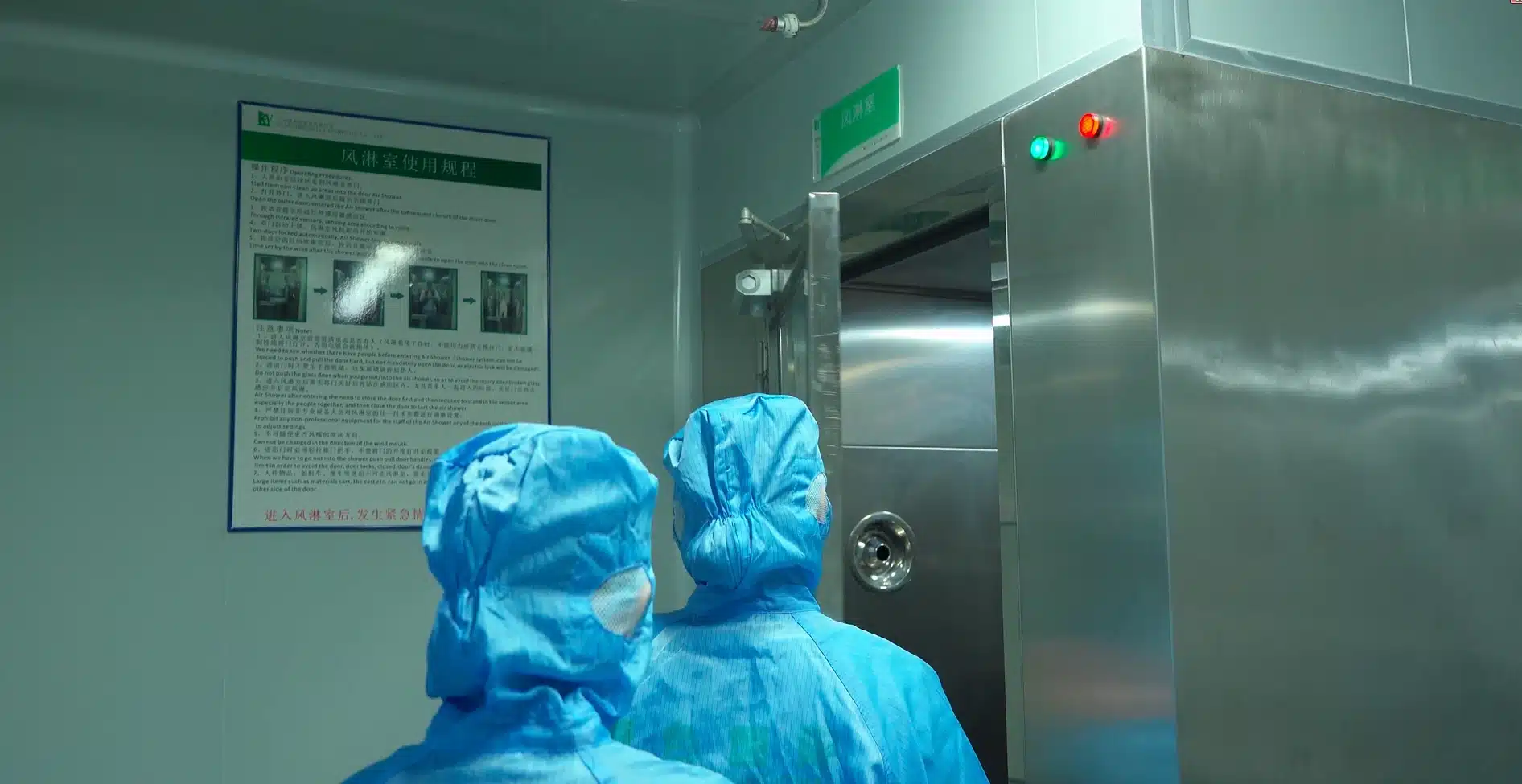
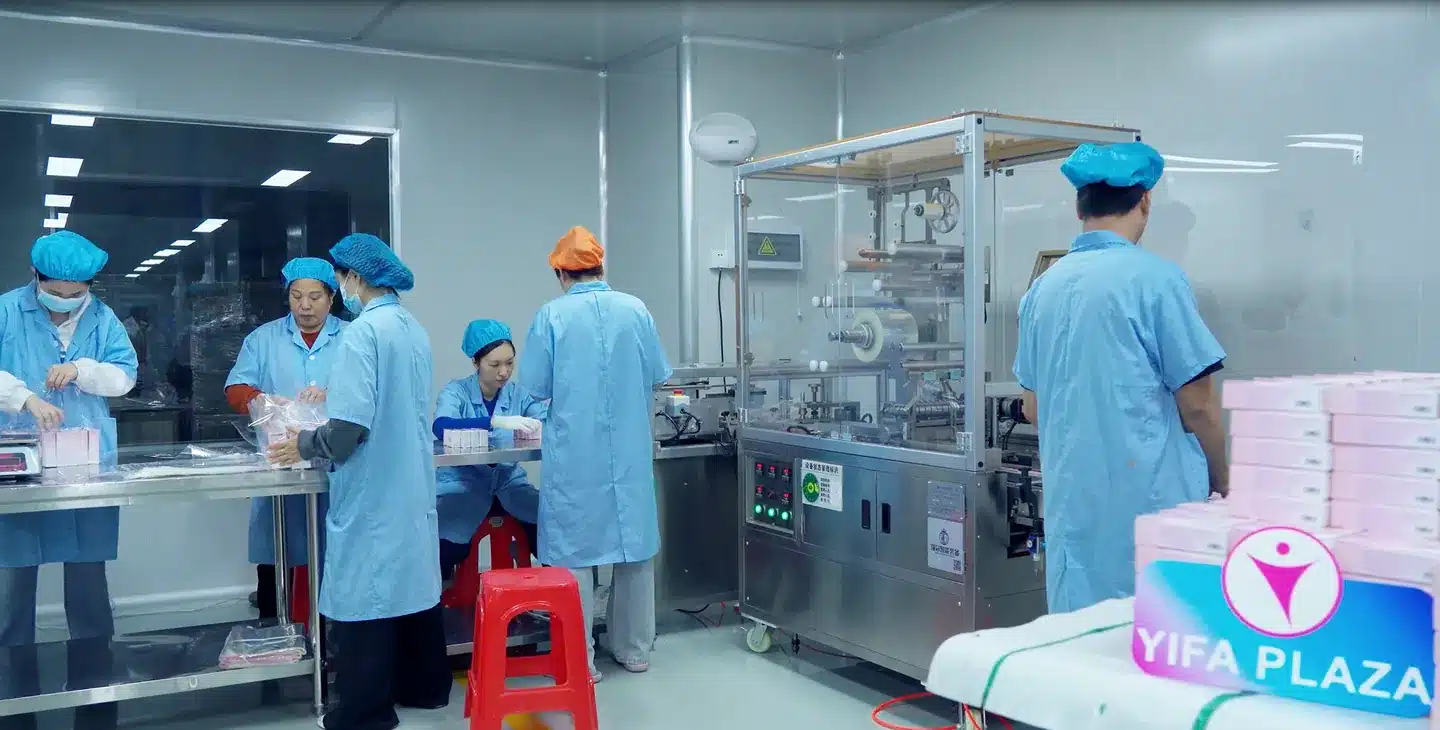
A factory may hold valid licences but still lack the equipment, environmental controls or experience needed for a specific formula and pack. The audit therefore has to follow the actual product route.
| Audit area | Evidence to inspect | Buyer question |
|---|---|---|
| Raw-material control | Approved supplier list, incoming inspection, quarantine status and lot identification | How is a rejected or expired material physically blocked? |
| Weighing and compounding | Batch instructions, calibrated scales, vessel capacity and line clearance | What is the minimum and maximum practical batch size? |
| Water system | System diagram, sampling plan, sanitation records and recent results | Which products use purified water and how is the loop monitored? |
| Filling and packing | Line speed, fill-weight checks, coding, reconciliation and foreign-matter controls | Can the line handle the selected bottle, pump, tube or jar? |
| Quality control | Specifications, methods, equipment logs, out-of-specification procedure and release authority | Who can release or reject a finished batch? |
| Warehouse | Temperature controls, status labels, FEFO/FIFO practice and pest-control records | How are released, quarantined and rejected goods separated? |
Match the report to the proposed product
A supplier may show research on an ingredient, a report for an earlier formula and a certificate for its facility in the same presentation. Record what each document actually covers before treating them as an approval file.
For a product report, identify the sample, formula reference, test date, method and result. Ask whether the sample matches the version being quoted. If it does not, have the supplier explain the difference and identify any additional work needed for your project.
Keep unresolved points in the supplier comparison. A large document folder is less useful than a short record showing which questions have been answered for the actual product and which remain open.
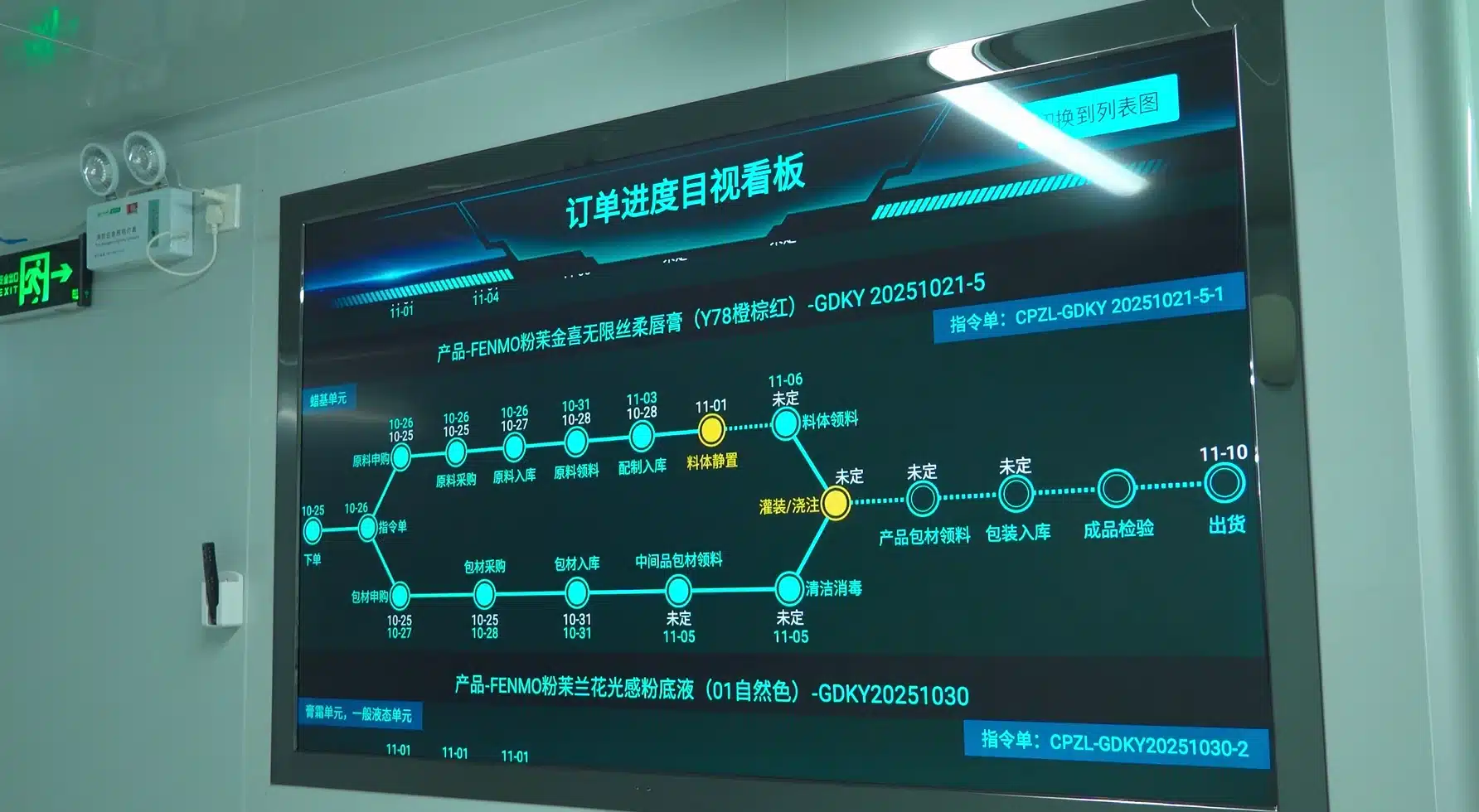
Step 5: trace one batch from materials to release
The fastest way to test whether a quality system works is to select one recent product and request its complete traceability path. The factory should be able to connect the finished lot to the approved formula, raw-material lots, packaging-component lots, production date, operators, in-process checks, finished-product results and release decision.
Review at least these records:
- Master formula and approved batch instruction
- Raw-material dispensing and weighing record
- Equipment cleaning and line-clearance record
- Bulk manufacturing and in-process control record
- Filling, coding and packaging reconciliation
- Finished-product COA and release authorisation
- Deviation, rework or nonconformance records
- Retained-sample location and retention period
- Complaint and recall traceability procedure
Ask the factory to perform a mock trace: select a finished batch number and identify the relevant raw-material and packaging lots. A system that cannot retrieve the records promptly presents a higher control risk.
Step 6: review destination-market documentation
Factory verification and market compliance are separate workstreams. The factory provides manufacturing evidence, but the brand owner, importer or appointed responsible person must confirm the legal route for the sales market.
European Union projects
For EU placement, the project normally requires an EU Responsible Person, safety assessment, Product Information File, compliant label and notification through the CPNP under Regulation (EC) No 1223/2009. Before production, confirm that the factory can provide the full quantitative or qualitative formula information, raw-material documentation, manufacturing statement, test data and packaging information requested by the safety assessor.
United States projects
Under MoCRA, applicable manufacturers and processors must register facilities, and responsible persons must list marketed cosmetic products. The US FDA states explicitly that cosmetic facility registration and product listing are not an approval programme and that FDA does not issue registration or listing certificates for promotional use.
Treat any claim of “FDA-approved cosmetics” or a paid “FDA certificate” as a warning sign unless the product falls into a separate regulated category with different requirements.
Documents to request before paying a deposit
| Document | Purpose | Minimum review |
|---|---|---|
| Business licence | Identifies the legal entity | Name, social credit code, address and status |
| Cosmetics production licence | Confirms licensed manufacturing scope | Company, site, permitted items and validity |
| ISO 22716 or GMP evidence | Supports quality-system review | Certificate source, scope, site and current status |
| Product specification | Defines what will be manufactured | Formula code, appearance, performance limits, fill and packaging |
| Approved sample record | Creates the production reference | Sample number, version, approval date and retained sample |
| Formula and INCI file | Supports safety and regulatory review | Version, completeness, restrictions and confidentiality |
| Packaging specification | Controls component quality | Material, capacity, dimensions, colour, decoration and tolerances |
| Test plan | Defines product and pack risk controls | Method, duration, samples, acceptance criteria and report format |
| Quality agreement | Allocates release and change-control duties | Deviations, substitutions, rework, records, complaints and recalls |
| Commercial quotation | Fixes the purchasing basis | MOQ, tooling, testing, packing, Incoterm and payment stages |
Red flags that require escalation
- The supplier refuses to identify the legal manufacturer before payment.
- Certificate names or addresses do not match the factory being offered.
- A “factory tour” shows only a showroom, sample room or warehouse.
- Production records are prepared after the visit or lack batch numbers and signatures.
- The supplier promises any formula can be sold worldwide without market review.
- The bank beneficiary changes shortly before payment.
- The final quotation omits testing, packaging decoration, moulds or inspection costs.
- The factory will not retain an approved sample or agree to written change control.
Remote verification when an on-site audit is not possible
A live video audit is more useful than a prerecorded factory video when travel is not possible. Ask the host to begin outside the building, show the company sign and street location, then move through material receiving, warehouse, weighing, manufacturing, filling, quality control and finished-goods areas without cutting the call.
Before the call, send a route and document list. During the call, ask the host to show a current batch record, a calibration label, a retained sample and the line intended for the project. For higher-risk or high-value orders, appoint an independent auditor before the deposit or before mass production.
Frequently asked questions
How can I tell whether a Chinese cosmetics supplier is a factory or a trading company?
Compare the seller’s business licence with the cosmetics production licence and the factory address. Ask who employs the production staff, owns the equipment, signs the batch release and receives payment. A trading company can still be a valid sourcing partner, but it should not represent another company’s factory as its own.
Is ISO 22716 certification enough to approve a cosmetic manufacturer?
No. ISO 22716 supports GMP review, but the buyer must also verify the audited site and scope, actual production capability, product-specific controls, documentation, packaging compatibility and destination-market obligations.
How do I verify an ISO 22716 certificate?
Check the certificate number, legal company name, site address, scope, issue date and current status with the certification body or its public directory. Request the audit report or corrective-action summary when available.
Does FDA facility registration mean the factory or product is FDA approved?
No. FDA states that cosmetic facility registration and product listing are not approval programmes and that it does not issue certificates for these submissions.
What should I verify before paying the first deposit?
At minimum, verify the contracting company, legal manufacturer, production licence, applicable quality certificate, bank beneficiary, written product specification, sample plan, total quotation, testing responsibilities and refund or corrective-action terms.
Can verification be completed without visiting China?
Initial screening can be completed remotely through official records, certificate checks, live video, document review and an independent audit. For a high-value custom project, an on-site audit and pre-shipment inspection provide stronger evidence.
What does YIFA PLAZA do during supplier screening?
YIFA PLAZA helps buyers compare supplier capability, sourcing route, MOQ, documentation and export-market experience, and coordinates requests for factory and product records. The buyer or appointed auditor should make the final technical and compliance decision against the project’s written requirements.
Prepare a supplier verification request
Start with the Guangzhou cosmetic OEM sourcing workflow, compare available manufacturer categories and review the OEM, ODM and private label routes. Buyers sourcing finished goods can also review skincare, makeup and cosmetic packaging categories.
Submit a supplier verification request with the product category, destination market, planned quantity, sourcing route and required launch date. These details determine which licence scope, production capability and documents should be checked first.
Official references
- ISO 22716:2007 — Cosmetics GMP guidelines
- US FDA — Registration and listing of cosmetic product facilities and products
- European Union — Regulation (EC) No 1223/2009 on cosmetic products
- China NMPA government services portal
This guide is a procurement due-diligence framework, not legal advice or a substitute for a destination-market safety assessment. Requirements vary by product, claim, production site and sales country.
Industry context and editorial source
The distinction between ingredient research, formula assessment and finished-product evidence is informed by the quality-comparison discussion in the 2023 Guangzhou Cosmetics Industry White Paper, pp. 90–91, compiled by Nanfengchuang Media Think Tank and Guangzhou Institute of Quality Supervision and Testing. The document checks in this guide are YIFA PLAZA’s editorial interpretation. They do not imply that the report has audited or endorsed a supplier for your order. Read the official publication report, 2 November 2023.
Need supplier options for this product?
Share the product type, target quantity, destination market, customization and required documents. Our team will compare suitable wholesale, private-label and OEM/ODM options in Guangzhou.
Send your sourcing requirementsContinue your research
Related buying guides
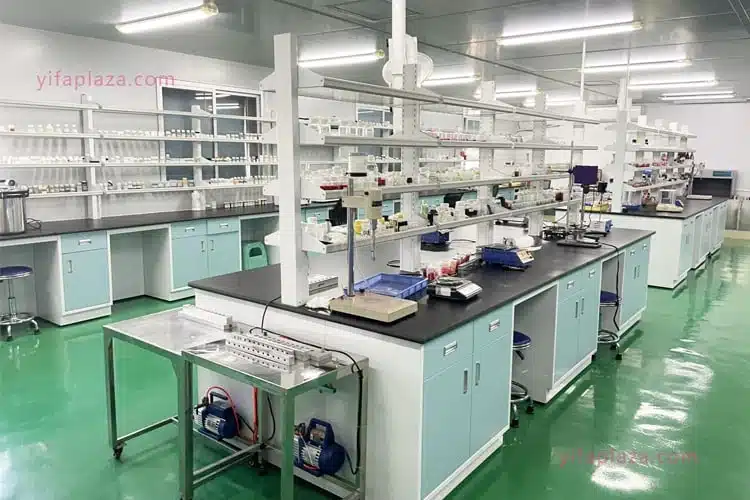
Custom Skincare Formulation: Write the Brief Before Requesting Samples
Decide whether your skincare project needs a new formula, a modification or a private label route. Prepare a comparable brief and track…
Read the guide
Airless Pump vs Standard Lotion Bottle: Packaging Compatibility & Leakage Test Standards
Compare airless pumps and lotion bottles. Review formula compatibility, leakage test scopes and the supplier evidence to request before packaging approval.
Read the guide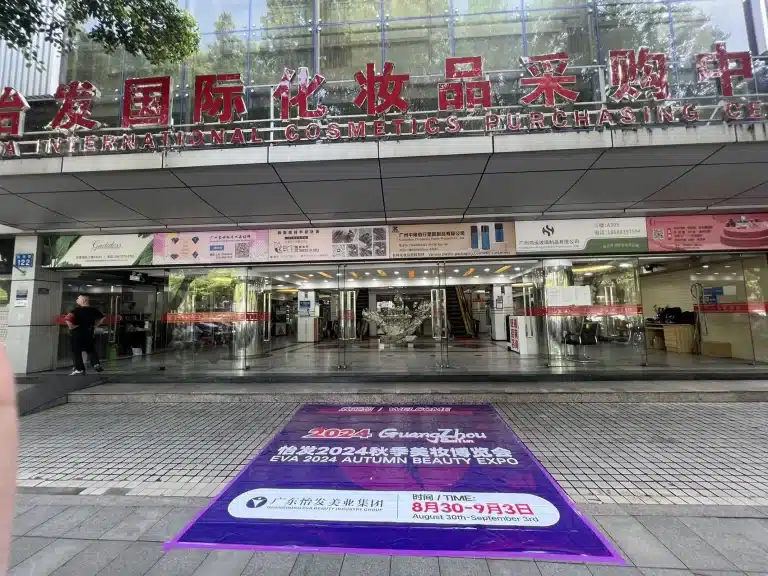
Guangzhou’s Cosmetics Sourcing Network: Where YIFA PLAZA Fits
How YIFA PLAZA connects showroom visits, supplier discussions and manufacturing enquiries within Guangzhou’s cosmetics sourcing network.
Read the guideSupplier matching
Tell us what you need to source
Send your product category, expected quantity, sales market and required documents. We will organize the brief before matching suitable suppliers.